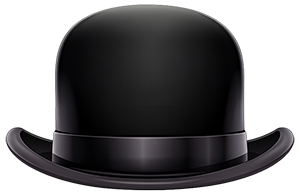

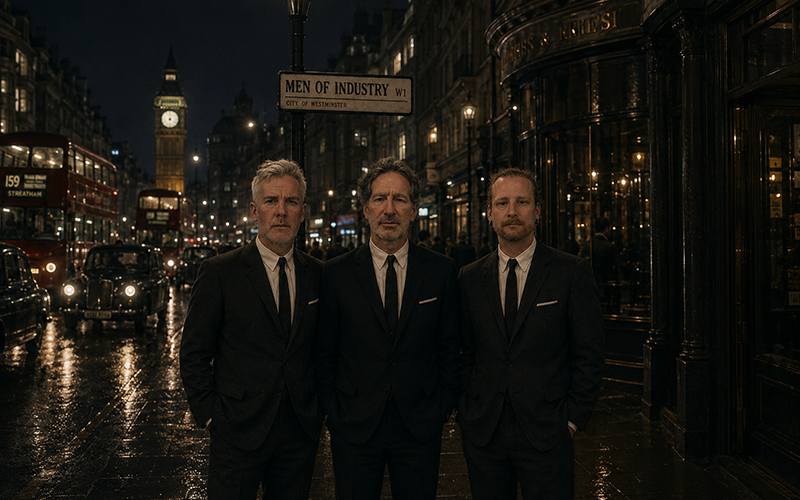
Few bands have garnered admiration, myth and folklore quite like Gentlemen of Industry. For nearly four hundred years the band has occupied a unique place in musical history, performing through revolutions, wars, technological change and the shifting sands of musical fashions to establish themselves as the world’s most enduring and hardest working rock band.
From the band’s first documented appearance in the spring of 1627 in a small English tavern, local scribes recorded that the performances would continue late into the small hours to delighted audiences and rapturous applause, before the troubadours would disappear quietly before dawn.
From these humble beginnings Gentlemen of Industry established a reputation as the must see touring act in taverns, alehouses and the village festival circuit in the summer of 1628.
Keen to build upon this success, the band embarked upon a thirty year tour of England. Enthusiastic audiences young and old, rich and poor would flock to see the Gentleman, as it was rumored that the three minstrels’ timeless melodies and haunting refrains could cure the Black Plague.
The Gentlemen’s fame grew with every appearance as their schedule continued apace; with only a brief interlude when the Great Fire of London broke out in 1666, rumored to be caused by primitive pyrotechnics utilized in the band’s shows at the time.
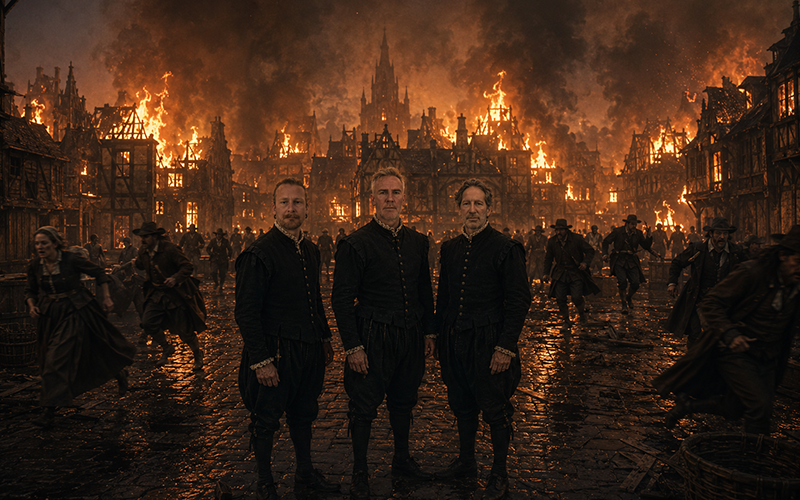
While London was rebuilding its venues and music halls, Gentlemen of Industry began carrying their music across the Old World aboard merchant vessels, naval ships and trading galleons.
They sailed the high seas via the great ports of Europe and the Mediterranean, performing wherever they dropped anchor—from bustling dockside taverns and candlelit gilded halls to the grand residences of merchants and nobility.
Their journeys through the age of sail laid the foundations for what would become four centuries of uninterrupted touring.
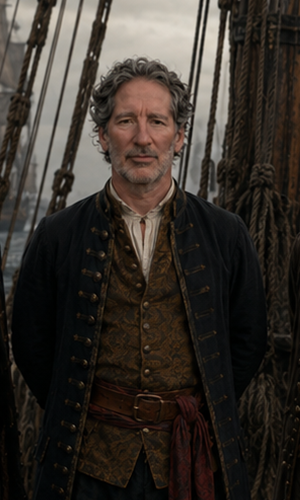
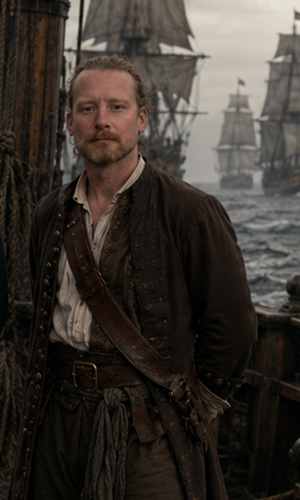
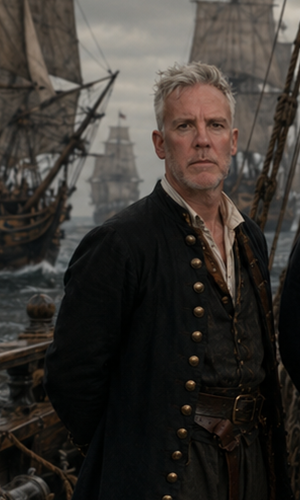
However, the 1600s were perilous times, even for swashbuckling musicians, and it would not be long before the Gentlemen’s infamy brought about the unwanted attention of the Spanish Inquisition.
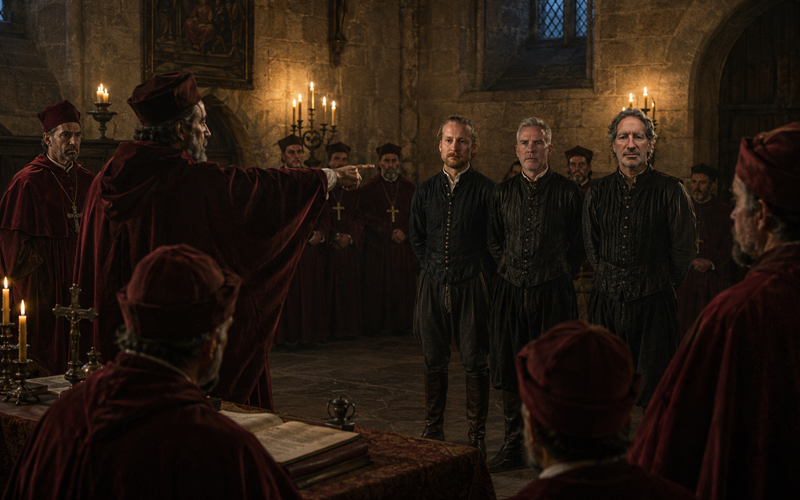
It was during their Grand Tour in the Summer of 1672, the band were playing a series of shows in the Basque region when arrested by the religious lunatics and charged with heresy.
A brief hiatus ensued while the band was incarcerated awaiting execution, but once more their dazzling musical skills came to bear, after an impromptu a cappella vocal performance, their gaoler was convinced to allow the trio to make good their escape.
Over the following decades the band continued to tour across Europe – stories would soon spread like wildfire telling of their sensational musical feats. Peasants would report seeing the musicians in villages hundreds of miles apart — often on the same night. It was said that these itinerant entertainers could strike the stage, pack away their gear and be on their way to the next show in the blink of an eye.
By the turn of the Eighteenth century, Gentlemen of Industry had developed a reputation unlike any other touring act of the time. Contemporary journals would note that they performed with gusto, verve… and punctuality, whether putting on shows for dock workers, wealthy merchants or aristocracy.
By the late 1700s the band’s notoriety as the preeminent musical act of the age had been solidified, and from 1775 to 1799 the Gentlemen took up residency at the prestigious De Vere Grand Connaught Rooms in London, while continuing to headline outdoor festivals and music halls across Europe.
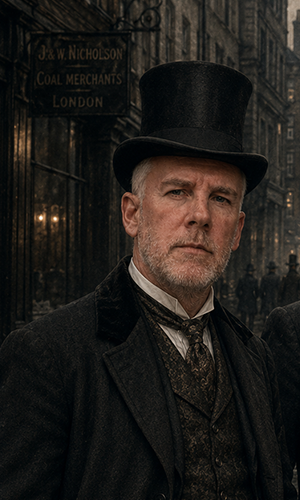
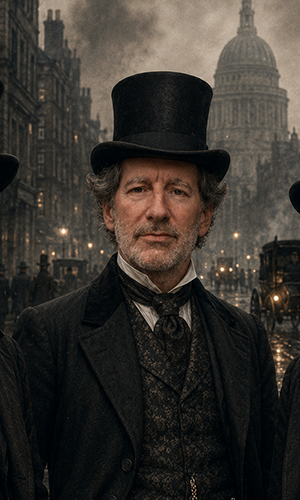
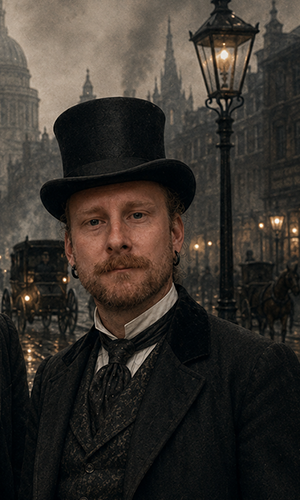
But, as a new century dawned, the Gentleman – never ones to sit on their laurels – set sail for the New World, voyaging across the Atlantic to America in 1802, whereupon they expanded their touring schedule dramatically. Initially performing around the East Coast and the South in the newly constructed concert halls.
Eminent American composers, poets and artists of the time regularly cited the Gentlemen as a profound influence, though the band themselves declined all opportunities to explain their extraordinary appeal and musical philosophy.
As the nascent country was gripped by the Gold Rush, the Gentlemen headed West and increased their touring schedule to meet the burgeoning needs of their newfound pioneering audience, and soon became the unlikely legends of the Wild West.
Traveling alongside wagon trains, riverboats and the rapidly advancing railroads, performing in rough-hewn frontier saloons, mining camps, cattle towns and newly built opera houses that seemed to appear overnight on the edge of civilization.
Records of the era would all note that regardless of the setting, the band was always impeccably well turned out.
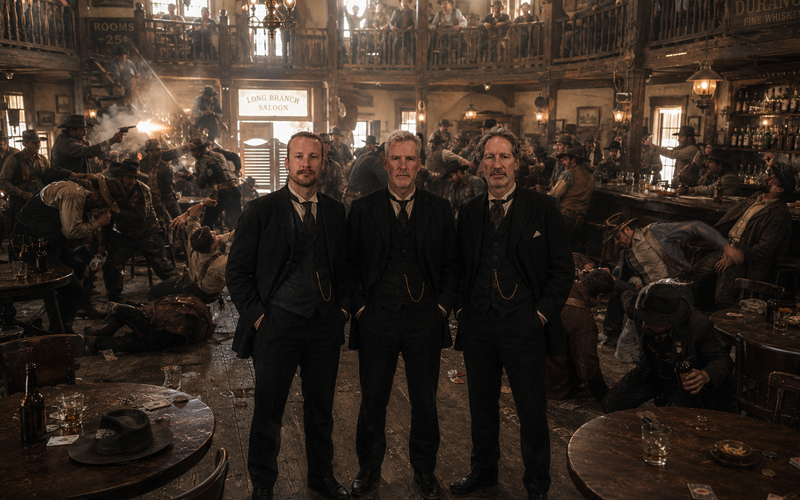
The trio would go on to tour the emerging towns springing up throughout the West, stopping to perform at campsites and pioneer settlements along the way. The Gentlemen entertained cowboys fresh from the trail, prospectors chasing fortune, railroad workers, lawmen and notorious outlaws alike.
It was documented that the band’s performances brought rare moments of serenity to the frontier; quelling many a gun fight and barroom brawl, while their raucous saloon shows would become the stuff of legend, woven into the mythology of the American West.
Soon enough, the Industrial Revolution began its inexorable march across the Western World, sweeping in a new era. So too, the Gentlemen of Industry would adapt and evolve once more, finding their way to less rustic settings and ushering in the Twentieth century with a hip new look, and a modernized sound.
Advances in technology had provided the band with new opportunities to perform across continents to further widen their audience. They enjoyed regular sojourns to far flung corners of the world — Gentlemen of Industry had established themselves as the world’s first international super group.
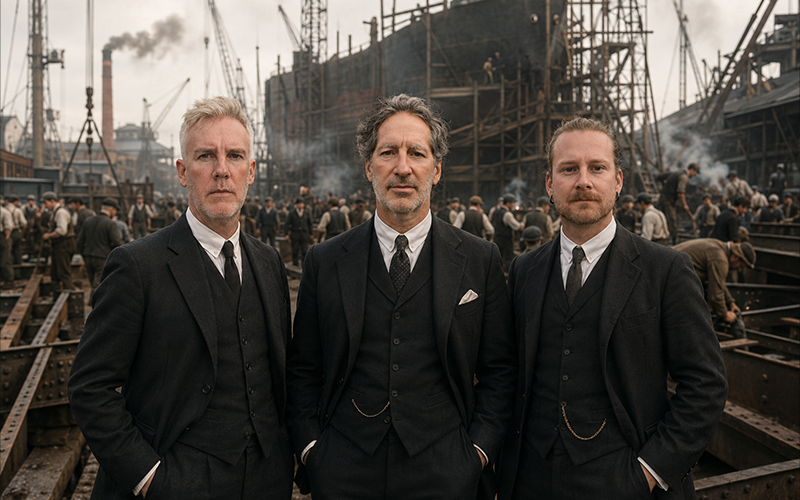
But once again, the Gentlemen found themselves in a scrape when accepting a Royal commission to play aboard the world’s largest ocean liner – its maiden voyage setting sail from Southampton, England in the spring of 1912.
The engagement began well enough, with the band playing to delighted crowds in the grand ballroom, and for three nights the guests danced and celebrated. The Captain’s Log noted that the shows were packed out, with rapturous applause imploring the group to deliver several encores.
But, alas, through no fault of the Gentlemen, their gigantic vessel ran into trouble, striking an iceberg and eventually sinking in the North Atlantic. As the great ship began to sink, the band were asked to play on, but they politely declined the invitation and made haste to the nearest lifeboat.
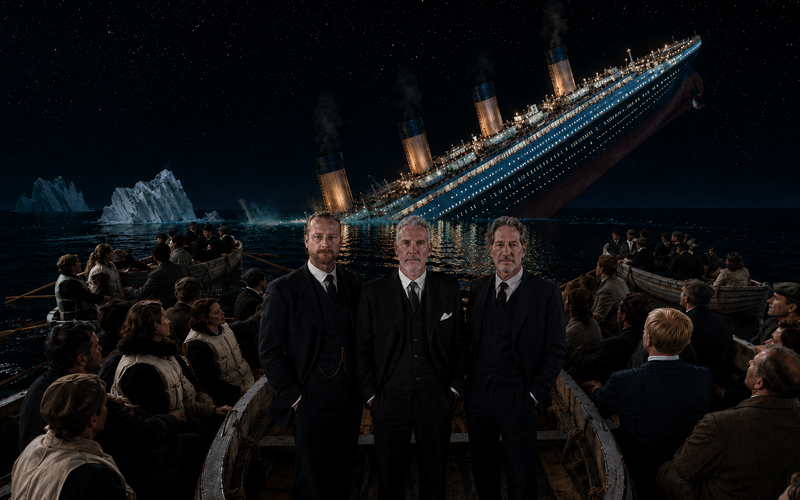
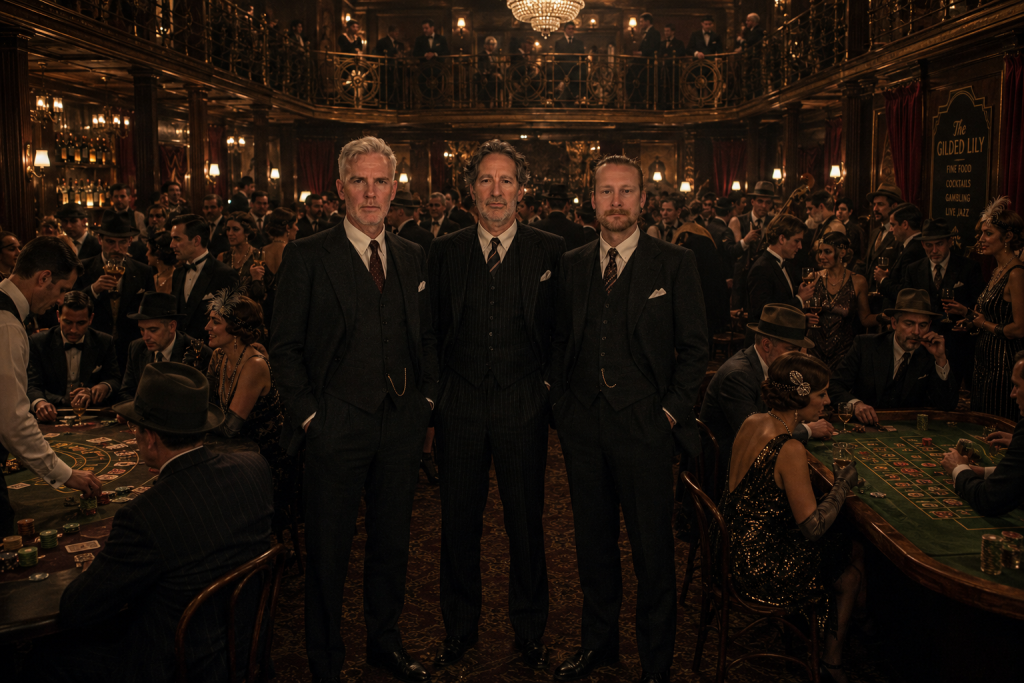
After returning to America the band continued their touring and played regularly across the country in music halls and amphitheaters, before setting up residency in the bustling Chicago speakeasy, The Gilded Lily in 1920.
America’s terribly pious prohibition era saw the Gentlemen playing uptempo, swinging sets to a packed house every night as audiences sipped contraband cocktails and gambled the night away with wild abandon.
These were heady times for our intrepid virtuosos, as they juggled their hectic performance schedule with smuggling weekly truckloads of Canadian booze while avoiding capture from the Dry Agents led by Elliot Ness.
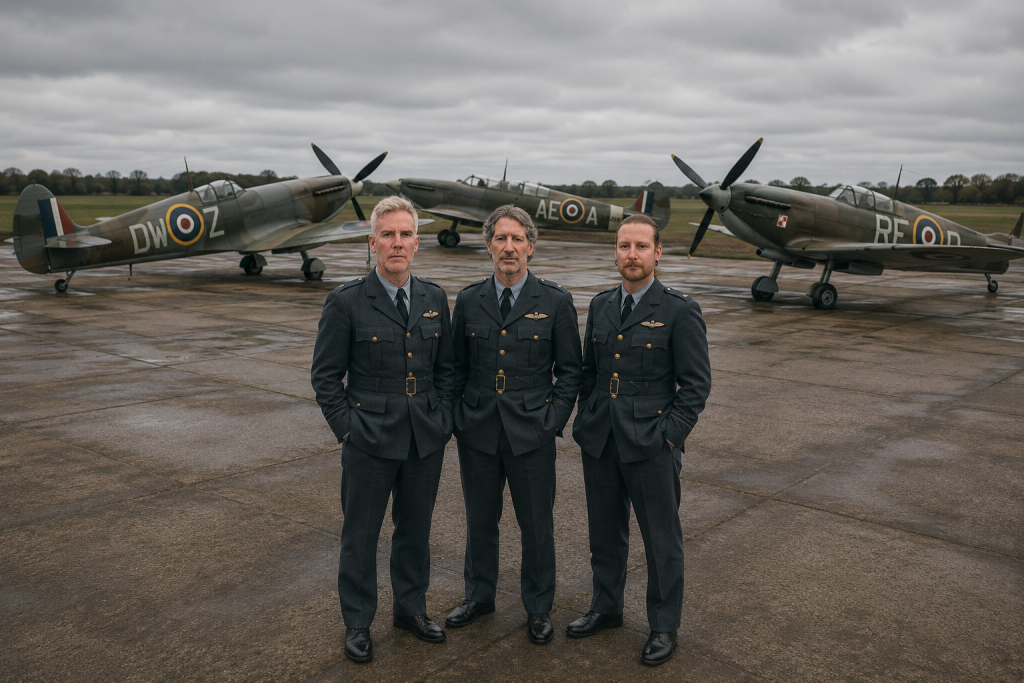
Another brief hiatus followed in the early 1940s when the Gentlemen of Industry received a telegram from trusted associates in Westminster bearing grim news: the war in Europe had taken a disastrous turn. The band was of course compelled to set aside their instruments and answer the call to arms, joining the fight against the rising tide of fascism that threatened to engulf the continent.
Legend has it that after several top secret strategy meetings with Winston Churchill and senior military commandeers, it was agreed the trio would be provisioned with the latest Spitfire fighter planes and join the Allied Forces in the struggle against Hitler – the testicularly challenged little genocidal maniac who was currently running amok in Germany.
The band took to the air in the fight against the awful Nazis with aplomb, derring-do and charisma. Flying alongside their new found chums in the Royal Air Force, it is said the Gentlemen gave Jerry what for – shooting down hundreds of Luftwaffe aircraft and helping to keep the skies safe over Europe.
Despite their demanding combat schedule, the Gentlemen somehow found time to honour a personal request from President Franklin D. Roosevelt, performing a string of secret concerts for Allied troops before the invasion of Normandy. Though rarely acknowledged in conventional history books, many respected historians now concur that the extraordinary boost to morale provided by these performances played no small part in the success of D-Day.
With the War ended, the 1950s heralded an era of peace and prosperity – Gentlemen of Industry now found themselves a jet-setting fixture among New York City’s social elite and London’s high society.
Though rarely appearing on concert bills, their reputation had spread quickly through private circles, leading to invitations to perform at exclusive galas, charity balls, society weddings, noted bar mitzvahs, bat mitzvahs, Fifth Avenue and Mayfair residences and black tie events.
By this time, commercial airlines had provided the band with opportunities to perform far and wide at the drop of a bowler hat, from Casablanca to Cairo, from Bogata to Buenos Aires… this period was one of their busiest to date, with sold out shows and private engagements throughout the 1950s and 60s.
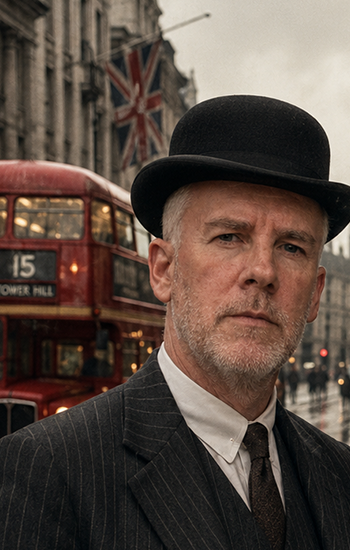
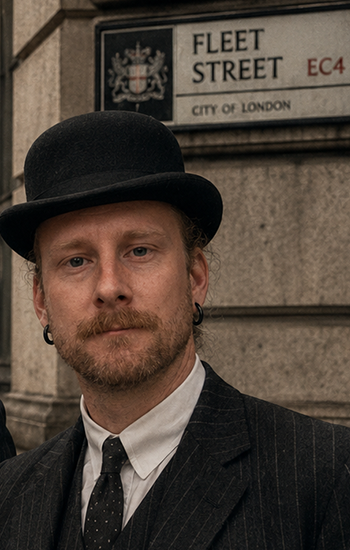

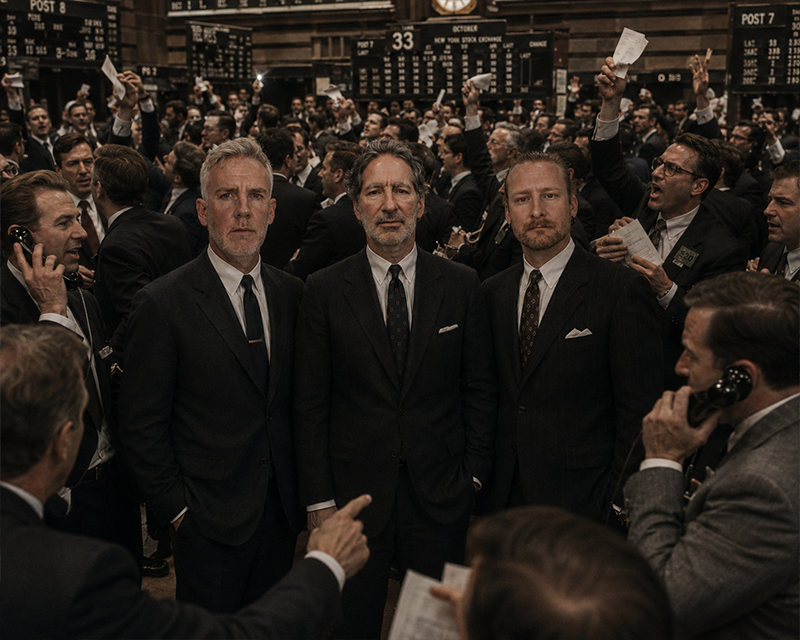
As the years rolled by, America would come to adopt the band as its unofficial soundtrack to the Golden Age. The Gentlemen would perform private celebrations hosted by titans of industry, Presidential galas, anniversary dinners at prestigious institutions and invitation-only gatherings where the city’s most influential movers and shakers relaxed after the closing bell.
Many a veteran broker would later recall leaving the deafening chaos of the trading floor to spend an evening unwinding at a society bash, entertained by the Gentlemen of Industry.
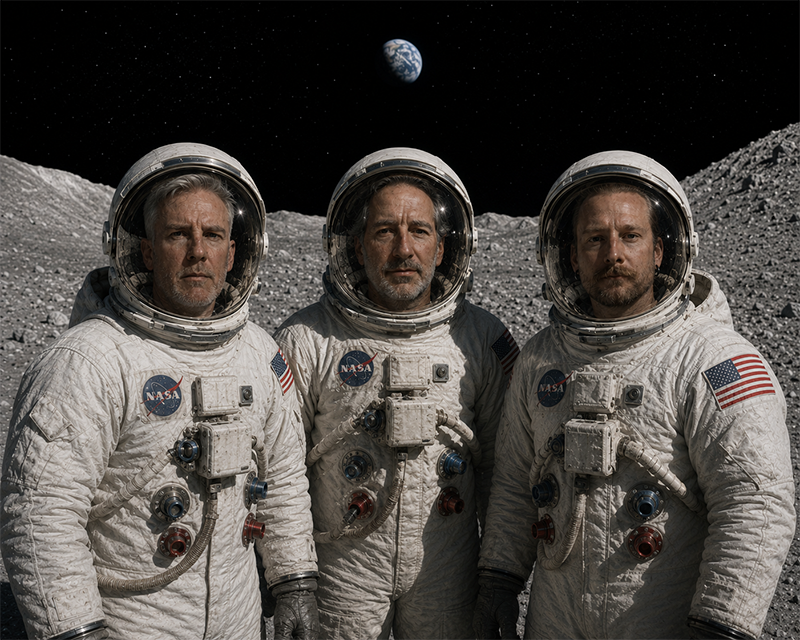
No doubt, among the most enduring stories surrounding the band is of course their legendary performance for NASA in 1982. Their space mission formed part of a classified program, the specific details of which remain unknown. But, it is said the Gentlemen performed a tight set on the lunar surface to a curious and appreciative audience.
Legend has it that the illustrious director Stanley Kubrick secretly filmed the event with the footage being transmitted to neighboring galaxies as an act of peace and goodwill. While NASA continues to deny the mission ever occurred, persistent rumors of the missing Kubrick reels – supported by remarkably consistent accounts from the band’s roadies of the era – offer tantalizing evidence that history’s greatest interstellar performance may not be fiction after all.
The 1980s was an especially busy period for the Gentlemen, as socio political change swept across the globe, the band once again found themselves at the heart of history’s greatest turning points.
In 1985, while the world’s greatest musicians gathered to raise funds for famine relief at the historic Live Aid concerts, the Gentlemen made unannounced cameo appearances at both Wembley Stadium in London and John F. Kennedy Stadium in Philadelphia on the very same day.
Eyewitnesses and music journalists alike insisted the trio delivered a blistering fifteen-minute set in London before appearing on stage in Philadelphia scarcely an hour later. Some credited Concorde, others whispered of a top-secret military flight. To this day, organisers on both sides of the Atlantic have declined to explain the mysterious gap in the running order, labelled only: “Special Guests.”
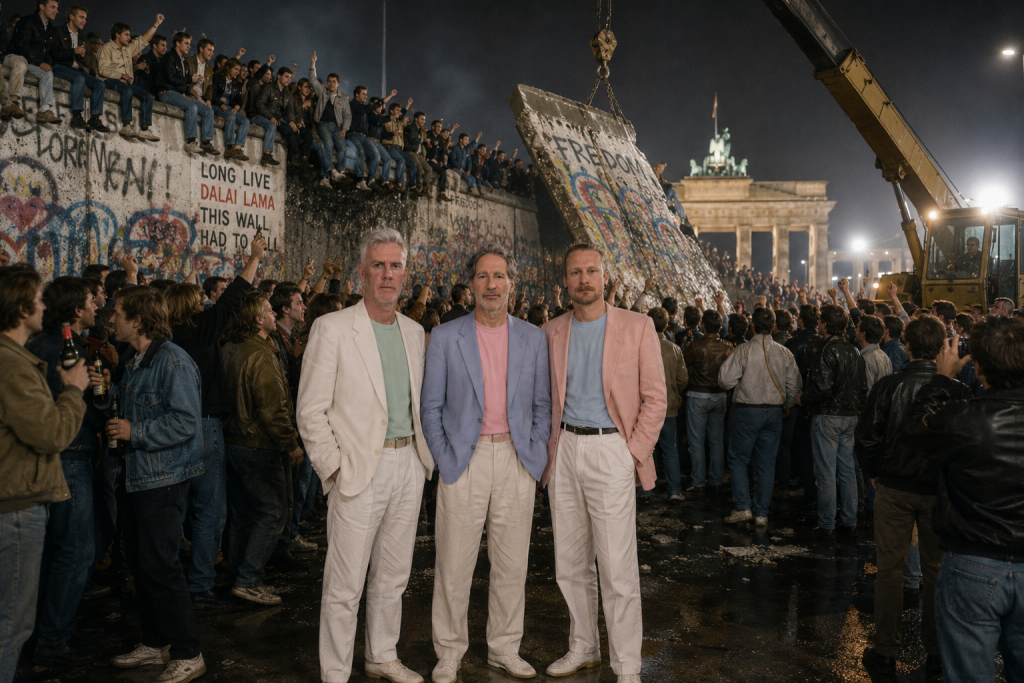
From their series of “People Power” concerts in The Philippines, which led directly to the 1986 peaceful revolution, to their legendary week-long marathon performance during falling of the Berlin Wall in 1989. If the moment was monumental enough, chances were the Gentlemen would be there to provide the soundtrack of the times.
As the Twenty First century dawned, Gentlemen of Industry established its new base in Los Angeles, securing studios in Hollywood and establishing a small network of venues to perform their tunes and provide audiences with an opportunity to also hear their long form improvisations, which they would weave into popular songs with taste and humor.
Though the band would take commissions to perform further afield, they now preferred to play more intimate settings, with a less taxing schedule – and who can blame them – as of writing, noted music historians estimate the Gentlemen have performed over 100,000 live shows.
Throughout history, Gentlemen of Industry’s lineup has appeared constant. Yet, rumors continue to this day of the power trio – their legendary performances are said to still be thrilling crowds young and old, well heeled and blue collar alike.
It is even whispered that if you are in need of a world class band for your event or venue, you can connect with the Gentlemen’s representation via this contact form – and if you state your needs and budget, someone will get back to you asap.